Plan and execute a staged
legacy-platform migration.

We map the current system, define the target architecture and migration increments, implement the agreed work and verify each state before cutover.

Current platformDependencies visible
Target boundaryResponsibilities explicit
Cutover stageChecks agreed
Stable stateHandoff documented

Three stages: map, design and migrate.

Each stage has named inputs, a technical output and a client decision before work moves forward.

In plain terms

Keep the current system live while the new path is built and checked.

  1. Keep the current system running

    Operations continue while we inventory dependencies, owners and change limits.

  2. Test the new path in parallel

    Functional, data and operating checks run against the old and new paths before any switch.

  3. Switch only when results match

    The new route goes live only after acceptance checks pass and the rollback and handoff records are ready.

1. Map the current platform.

Inventory components, data stores, interfaces, deployment environments, owners and the operating conditions inside the agreed scope.

Output
Current-state system map and dependency register
Client decision
What can stay, separate or requires replacement
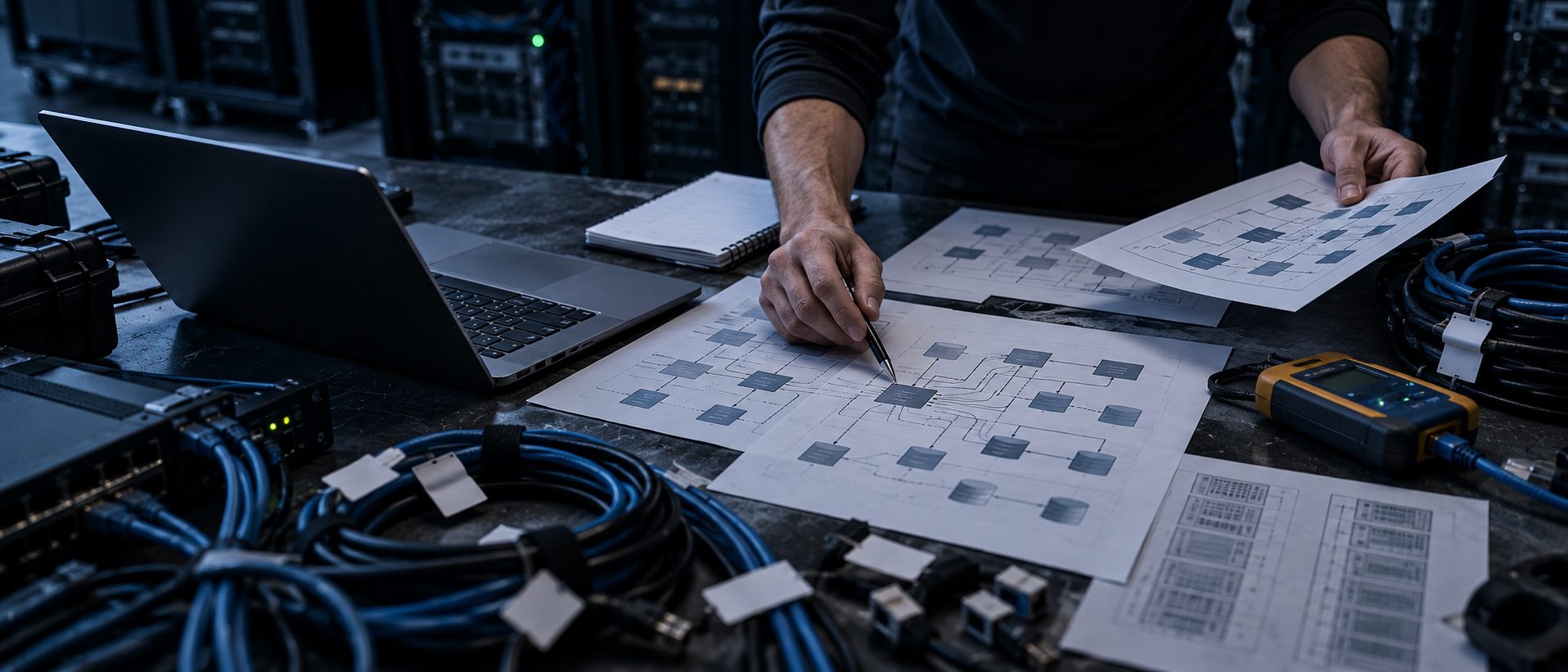
Conceptual overhead scene of an engineer mapping system dependencies across architecture sheets, tagged cables and test equipment.
Document what the old system depends on

2. Define the target architecture and increments.

Specify which components stay compatible, which boundaries are isolated, what is replaced and how data moves through each migration stage.

Output
Target architecture decision and migration sequence
Client decision
Which boundary and first increment are approved
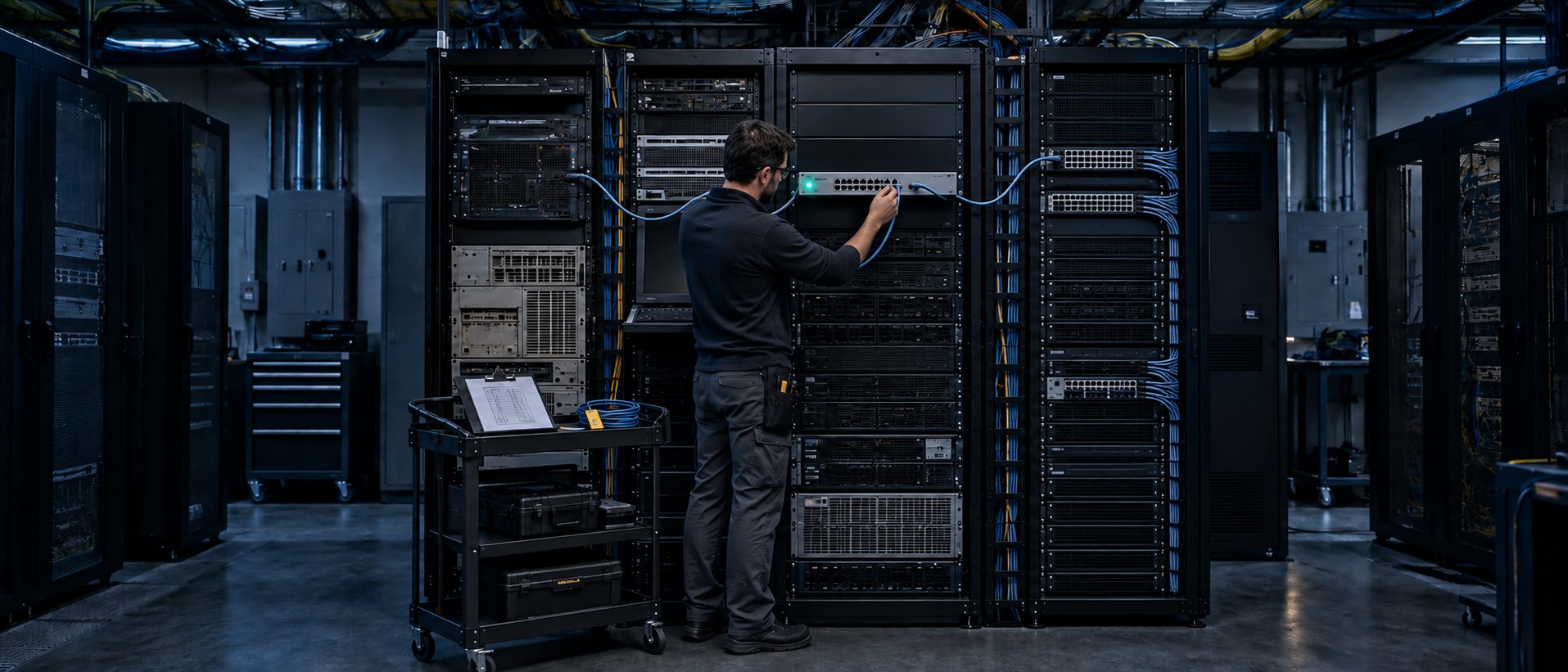
Conceptual scene of an infrastructure engineer connecting a gateway between an older server rack and new modular infrastructure.
Build the new route beside the old one

3. Implement, cut over and stabilize.

Build the agreed increment, run acceptance checks, control the switch and rollback conditions, then document the accepted platform state.

Output
Verification results, cutover record and handoff
Client decision
Continue, stop or roll back the stage
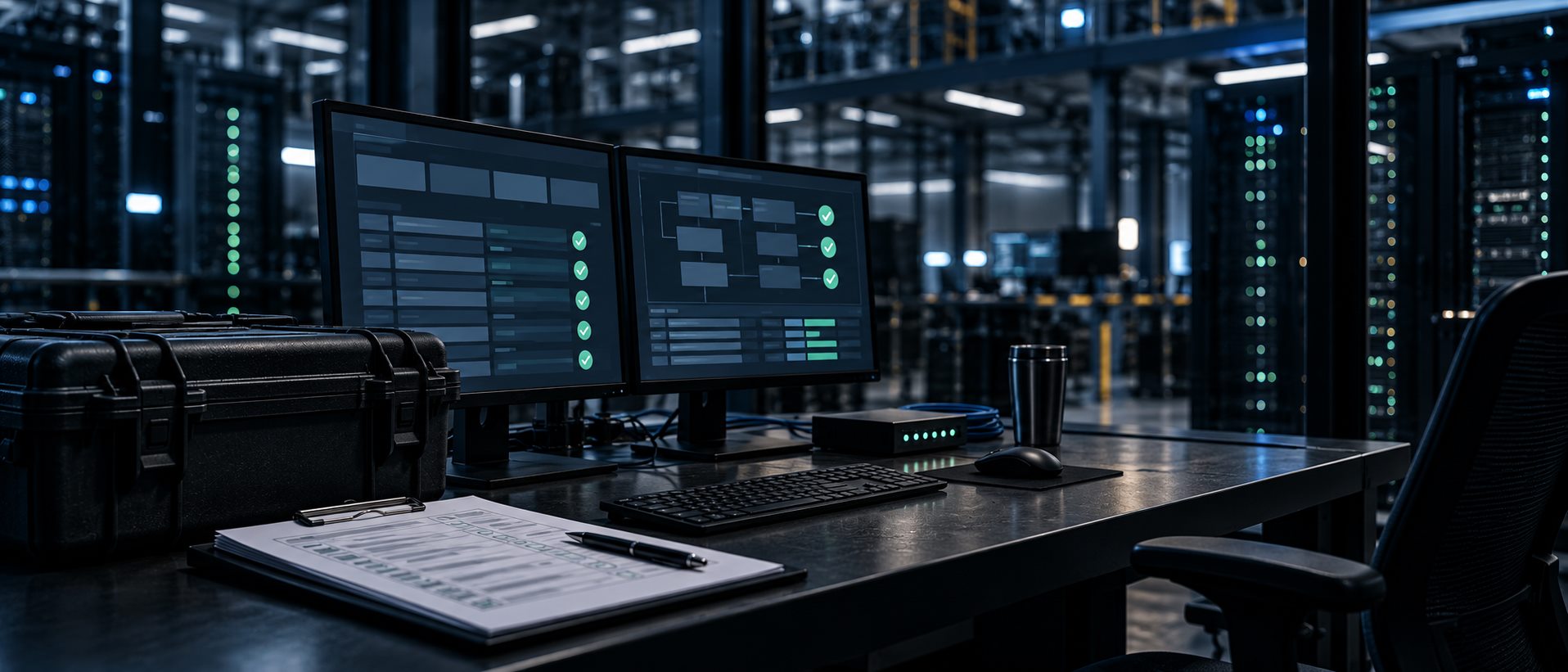
Conceptual verification desk with two system-state displays, an acceptance checklist and stable status indicators.
Verify the new route before switching

Technologies we use for system modernization.

This is our preferred set for new interfaces, services, data layers and delivery controls. We do not replace supported client technology just to standardize a project: the existing platform and operating requirements determine the final combination.

Frontend interfaces

Vue 3 + TypeScript

Used to replace interfaces screen by screen or build new operational tools. Vue supports incremental adoption, while TypeScript makes component and API contracts explicit during change.

Application services

Node.js + NestJS

Used for APIs, integration services and workflow orchestration. NestJS gives the codebase visible modules and boundaries, with TypeScript shared across browser and server work where appropriate.

Transactional data

PostgreSQL + Redis

PostgreSQL is the default for records that need relational integrity and transactions. Redis is added for caching, queues or short-lived state, not as a substitute for the system of record.

System integration

REST, OpenAPI + RabbitMQ

OpenAPI defines synchronous interfaces that teams can review and test independently. RabbitMQ is used when work needs to be decoupled, retried or processed asynchronously.

Runtime and delivery

Docker + automated CI/CD

Containers keep the agreed runtime repeatable across development, test and production. Automated build, test and deployment checks reduce manual release variation; orchestration is added only when operations require it.

Operational evidence

OpenTelemetry + Grafana

Traces, metrics and logs provide a comparable view of the current and new paths during migration. The telemetry remains portable if the client changes its monitoring backend.

The preferred set is not a mandatory replacement list.

We compare compatibility, support lifetime, security, operational fit, team capability, migration effort and total ownership cost before selecting a technology.

Keep
A supported component remains testable, operable and clearly owned.
Upgrade
Staying in the same ecosystem reduces migration surface and retraining.
Isolate
A stable contract controls a component that cannot move in the current stage.
Replace
Support, security, operating cost or delivery constraints outweigh compatibility.
Every architecture decision is recorded.

The record links an observed dependency to the selected boundary, acceptance condition and responsible decision owner.

Migration decision recordConceptual example
Observed dependencyShared customer data crosses three coupled modules.
Boundary decisionIsolate the data contract before runtime extraction.
Acceptance conditionBoth platform states produce the agreed record set.

Tell us what platform must change, what must stay live and which migration stage you need to plan.

Discuss a staged migration